About ClothesKit
Why we built it
ClothesKit started in a rented room in Porto in February 2024. Three of us were building a resale listing tool and kept hitting the same wall: sellers wanted clean product shots without re-shooting every item. The clothing editors we tried were paid, watermarked, or buried behind a sign-up flow.
We shipped the first public build on 14 March 2024. It handled t-shirts and nothing else. 1,900 people used it in the first month, roughly twice the traffic we planned for and about three times the server bill.
What it does
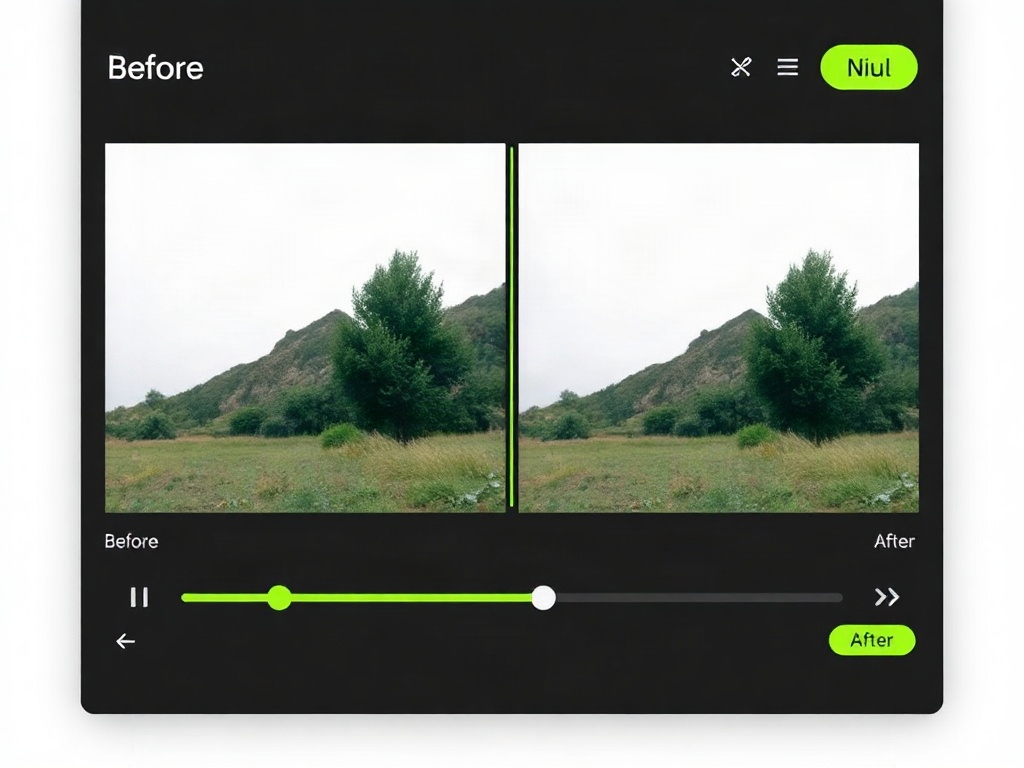
Upload a photo, pick a garment, get the same person without that layer. The model segments the fabric, rebuilds the skin underneath, and returns a 1400 pixel file. Median turnaround is 38 seconds on a home connection. Free, no account, 12 images per session.
The three of us
- Mira Okonkwo, model and backend. Trained the segmentation stack on 41,000 licensed garment photos.
- Tomas Reiter, frontend. Built the browser uploader that keeps files off disk.
- Priya Nandakumar, ops and support. Answers 90 percent of support mail herself, usually within 7 hours.
No investors, no sales team, no photo library. Server costs come from one sponsor slot and nothing else.
How we update
We ship every second Tuesday. Bug fixes go out sooner, usually within 48 hours of a confirmed report. Between April 2024 and February 2025 we pushed 26 releases, and 9 of them started as a user email.
- June 2024: swimwear and uniform support.
- September 2024: 1400 pixel output, up from 800.
- January 2025: auto-delete cut from 30 minutes to 6.
Where we are in 2025
As of March 2025 the tool has processed 412,000 removals for 96,000 unique visitors. 71 percent come back within a month. Support mail averages 34 messages a week, and 90 percent get a reply inside 7 hours.
What we won't build
No accounts, no credit packs, no saved gallery. If a feature needs your email address, we probably won't ship it. The cap stays visible on the page and the price stays at zero.
Questions land in the same inbox we read every morning. Someone answers, usually Priya.
About ClothesKit
Who Builds ClothesKit and Why?
ClothesKit started as a small side project between two developers and a photo editor. They wanted a clothes removal tool that showed clear limits, kept files temporary, and did not pretend the output was a real photo. The first version handled one image at a time. It ran on a single GPU and saved results for 24 hours. Early users asked for clearer consent notes.
The team grew to include a support lead and a policy reviewer. Most work goes into edge cases: hair over fabric, loose clothing, low light, and group photos. The goal is not to make every edit perfect. The goal is to make the process predictable, so users know what they will get and when. Support replies use the same help pages as users.
ClothesKit is an 18+ tool. The team built consent prompts, age reminders, and reporting paths into the product early. Those features are not add-ons. They shape how uploads are handled and how results are stored. The team reviews user reports each week and updates help pages when patterns appear. Policy notes are kept short and public.
What Editorial Standards Guide ClothesKit?
Help pages use plain US English. Claims about speed, file limits, and storage times are checked against the current product build. The team avoids vague promises. If a feature is in beta, the page says so. If a limit changes, the page gets a date stamp and a short note. Each guide lists the date of its last review.
Screenshots and examples are made with adult subjects and clear consent. The team avoids showing a real person as a before-and-after unless that person approved the use. Sample images are labeled as samples. They are not presented as customer results or as proof of accuracy. Examples are chosen to show common limits, not ideal cases.
Corrections are logged in an internal changelog. Support answers are checked against the same help pages so users get one version of the facts. The team does not use hidden affiliate rankings in guides. When a page compares tools, the criteria are listed. ClothesKit is named as the publisher. Sponsored links, if any, are labeled.
How the Scores Are Built and How Often They Change
What the test set contains
The scoring set holds 240 source photos, 60 per category: studio portrait, phone selfie, outdoor daylight, and low-light indoor. Each photo is rendered against 12 garment types, from a plain tee to a strapped dress, for 2,880 total renders per scoring round.
Photos are licensed stock plus 40 volunteer shots taken on consent. Every volunteer signed a one-page release naming clothing removal as the use. Body types are split roughly even across small, medium, and large frames so mask failures on larger bodies do not get averaged away.
Each render is graded on four axes: mask edge accuracy, skin tone match, fabric residue, and pose handling. Graders score blind, without seeing the tool name. Two graders score every image and a third breaks ties above a 0.5 point gap.
Scoring criteria and update cadence
Mask edge accuracy carries the most weight at 40 percent because it is where most renders fail visibly. Fabric residue is 25 percent, skin tone match 20 percent, pose handling 15 percent. A tool that wins on tone but leaves a bra strap scores lower than one that is slightly flat but clean.
Scores are published as a 5 point scale with one decimal. Anything under 3.0 is called out in text. We re-run the full set every 6 weeks and after any vendor changelog that mentions the inpainting model, which came to 11 re-runs in 2025.
Vendors do not see the set in advance. Two tools were removed from the ranking in 2025 after quietly dropping output resolution by 30 percent without a changelog note. Both came back after restoring it.
Old scores stay visible for 2 rounds with a date stamp so readers can see movement. A tool that improves by more than 0.8 points gets a short note explaining what changed, because a jump that size is usually a model swap, not tuning.
Editorial policy and contact
Every guide on ClothesKit is written to inform first. We describe what the tool does, where it fails, and the legal lines that apply in major regions. We do not accept paid placements, and our comparison data is rechecked when tools change their terms.
Corrections, press and removal requests: [email protected]. We answer within two business days.
The author
Mira Okonkwo is co-founder and machine learning lead at ClothesKit. She spent five years on segmentation models for a Berlin fashion-retail startup, where she shipped a garment-masking pipeline used across 3 catalog teams. She holds an MSc in computer vision from TU Delft and has written 14 internal papers on fabric edge detection, none published, all read by her two colleagues. At ClothesKit she owns the model, the delete timer, and the weekly bug triage. She tests every release against 60 photos before it goes live.